Signal
When the same warning appears on every transfer, people learn to tap past it.
- Role
- UX Designer & Researcher
- Type
- Self-initiated, solo
- Duration
- 2 weeks, October 2026
- Tools
- Claude Code, Next.js, Playwright
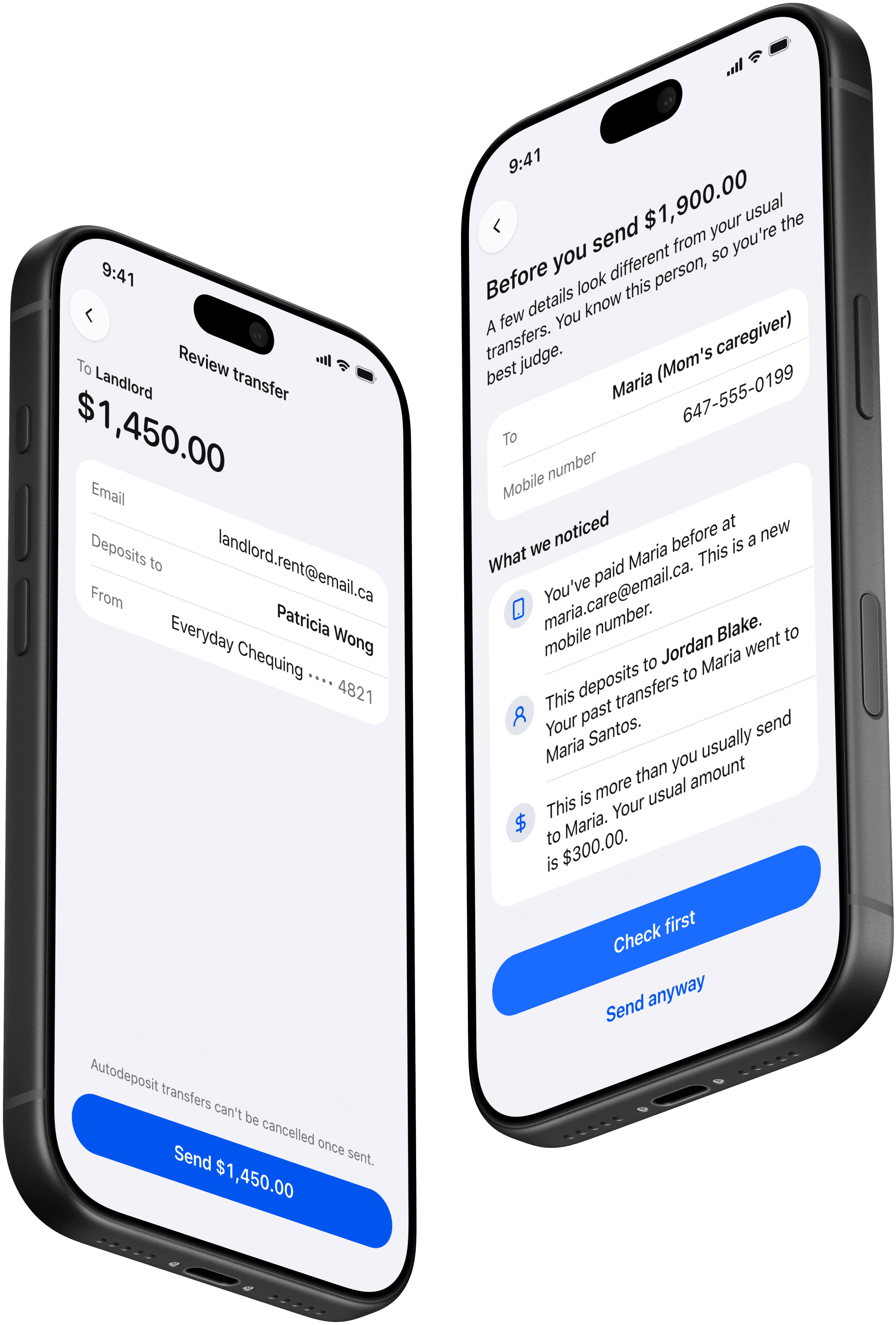
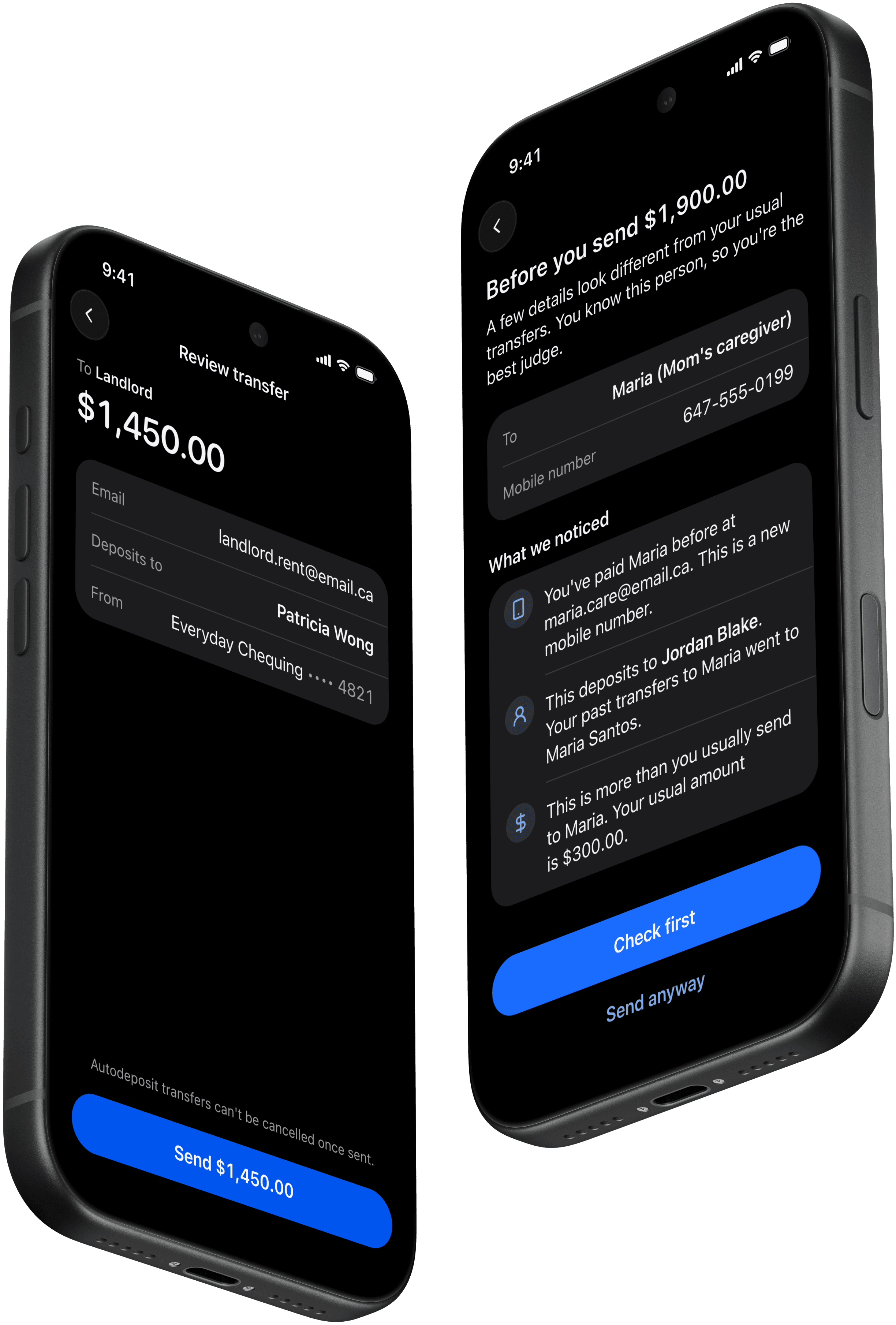
Signal is a feature for the review screen of a bank's Interac e-Transfer®. It stays quiet for ordinary transfers. When something is unusual, it adds a one-line note. When the unusual facts add up, it pauses before anything is sent and shows exactly what changed. In the prototype's example, Maria, a caregiver you've paid before, has a new mobile number, the money would go to Jordan Blake instead of Maria Santos, and it's more than six times her usual amount. You can tap "Check first" or "Send anyway". Signal never blocks a transfer. It uses only information a Canadian bank already has: the legal name from Autodeposit and your own transfer history.
The problem
In March 2026, an Ontario woman sent her mother's caregiver $1,900 by e-Transfer, as she did every month. She usually used the caregiver's email. This time she used the caregiver's phone number. That number was still registered for Autodeposit by its previous owner, so the money went to them. Her bank refused a refund, and her appeal failed. She got her money back only after CTV News (opens in a new tab) contacted the bank. For the bank, one transfer to the wrong person became a refused claim, a failed appeal, and a news story.
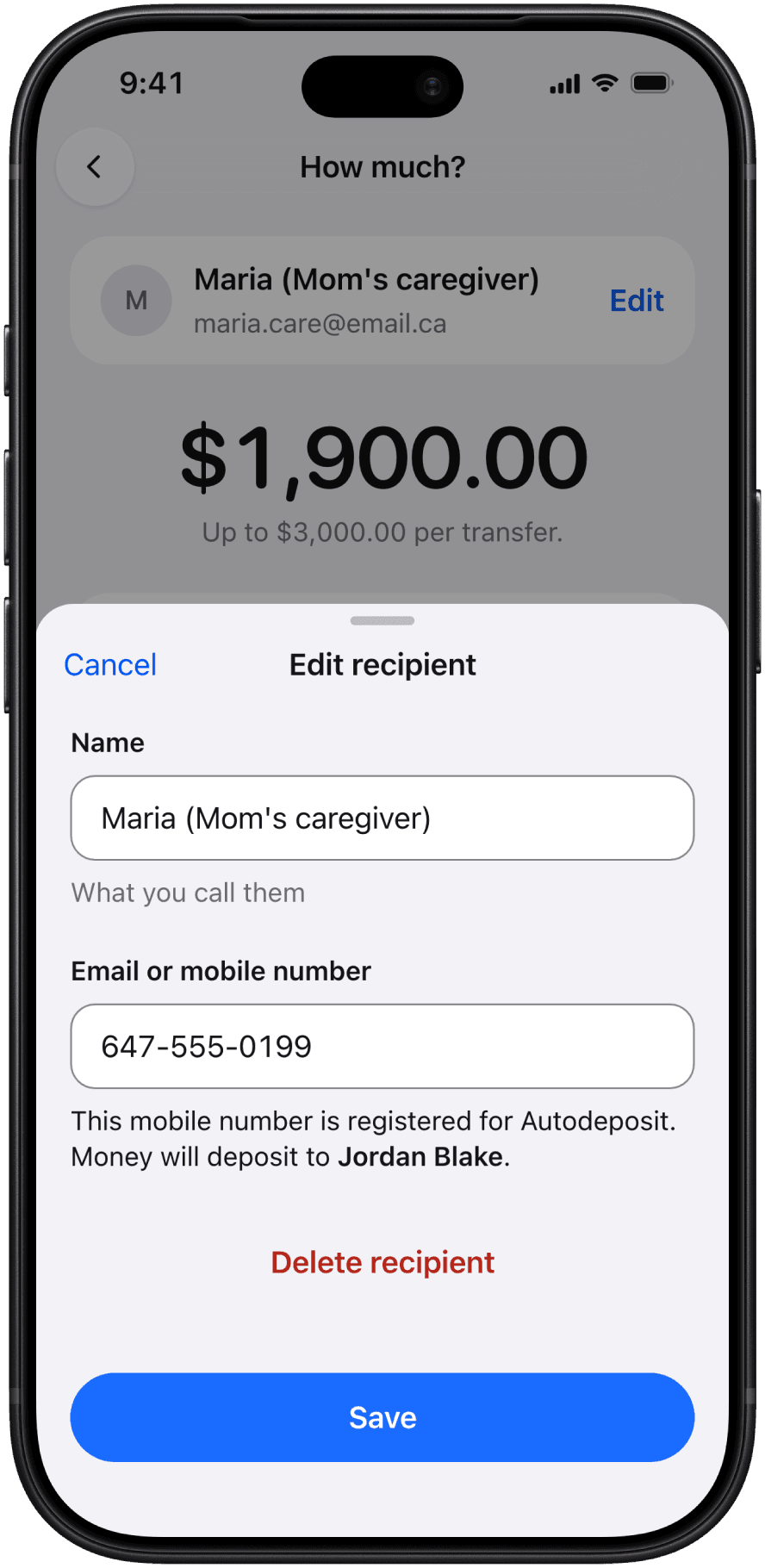
Interac said the recipient's legal name was shown before the transfer was sent, and that the case "underscores the importance of carefully reviewing the legal name pop up." There were 1.6 billion e-Transfers in 2025, so that pop-up appears constantly, and people stop paying attention to warnings they see often (Anderson et al., 2016 (opens in a new tab)). Signal is built for the one time it matters: someone you know, at a new number, where the money goes to a name that isn't theirs.
When to speak
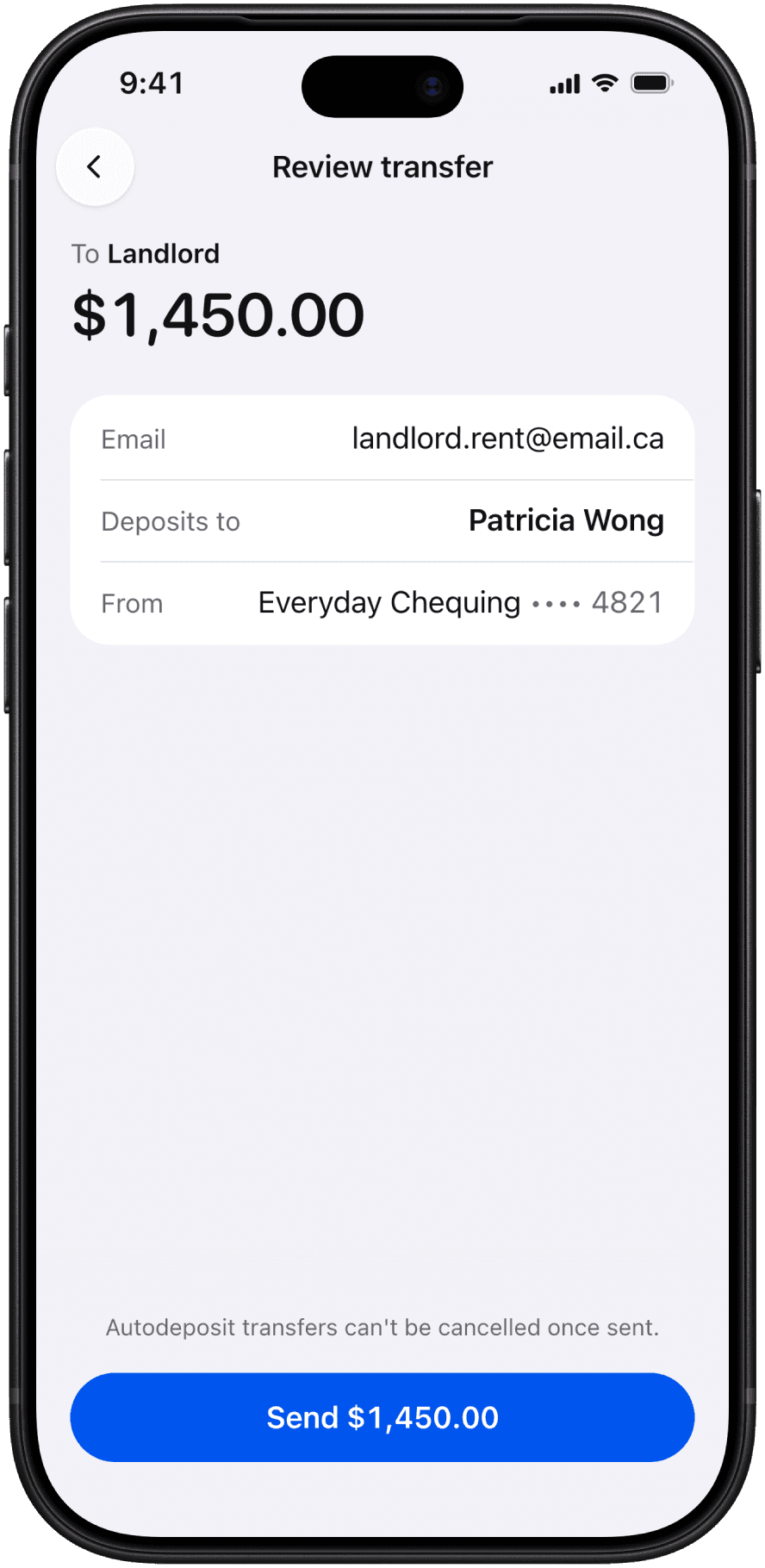
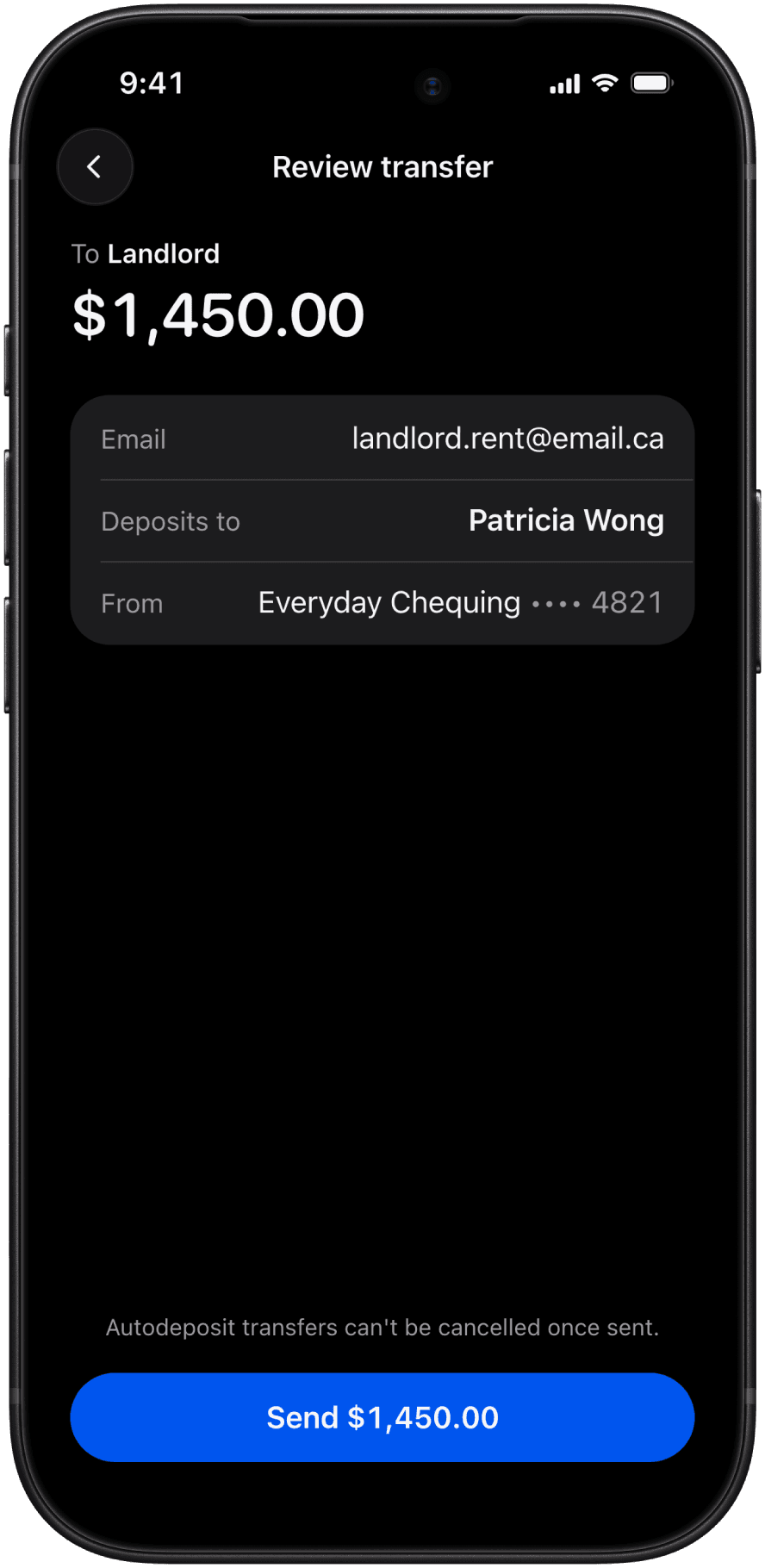
Nothing unusualNothing unusual: the usual rent, no note
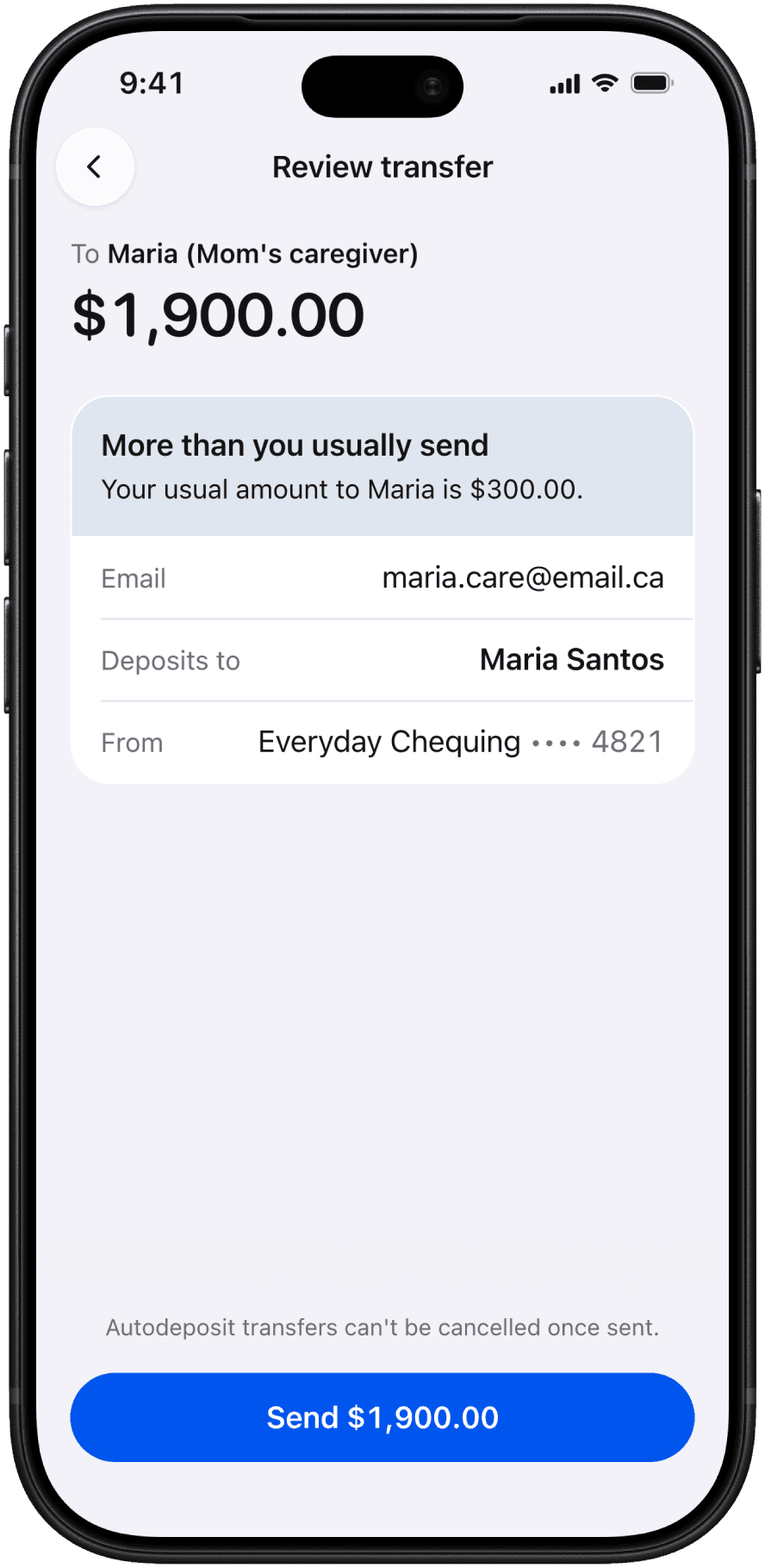
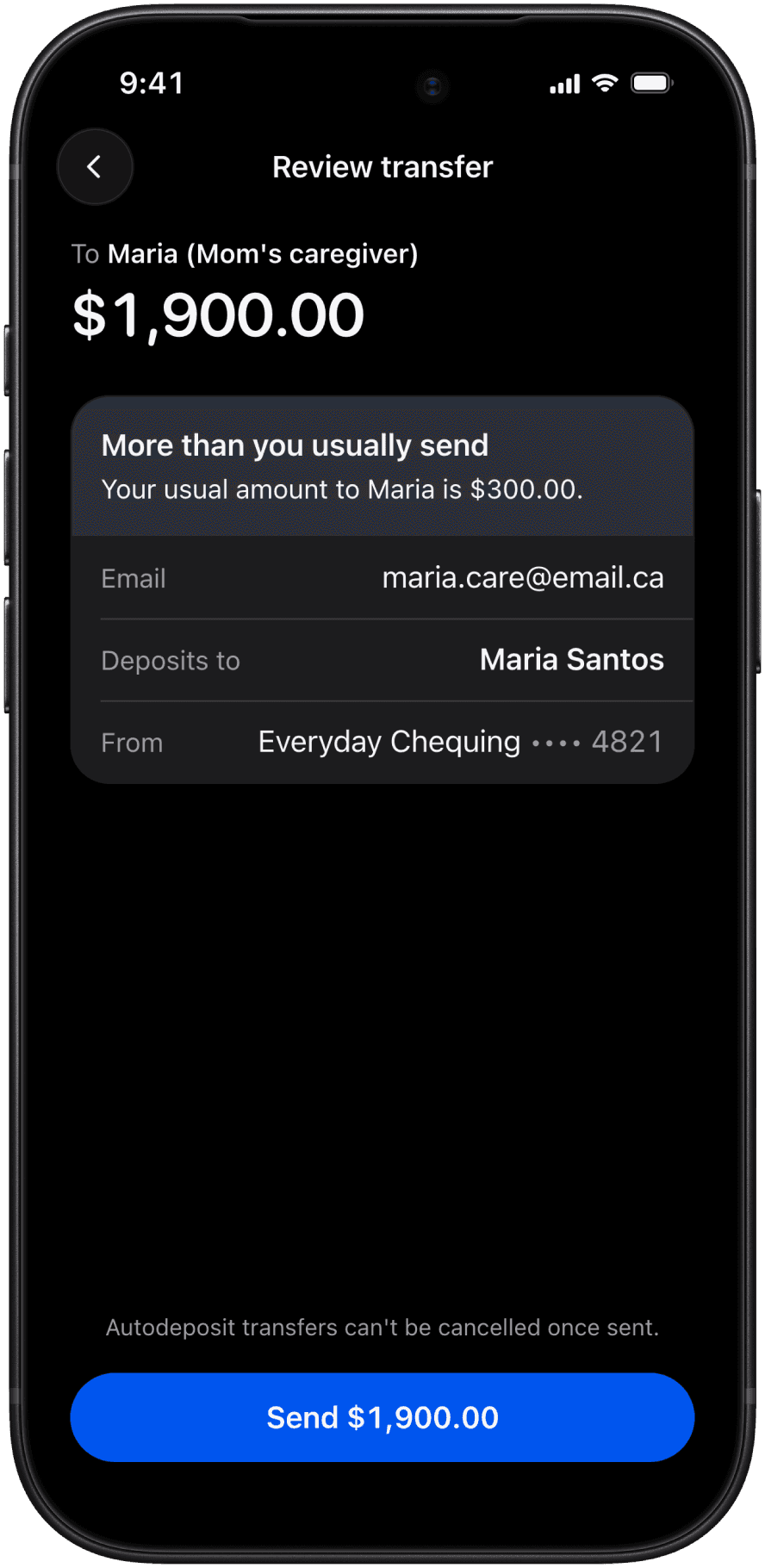
Something unusualSomething unusual: more than usual, said in one line
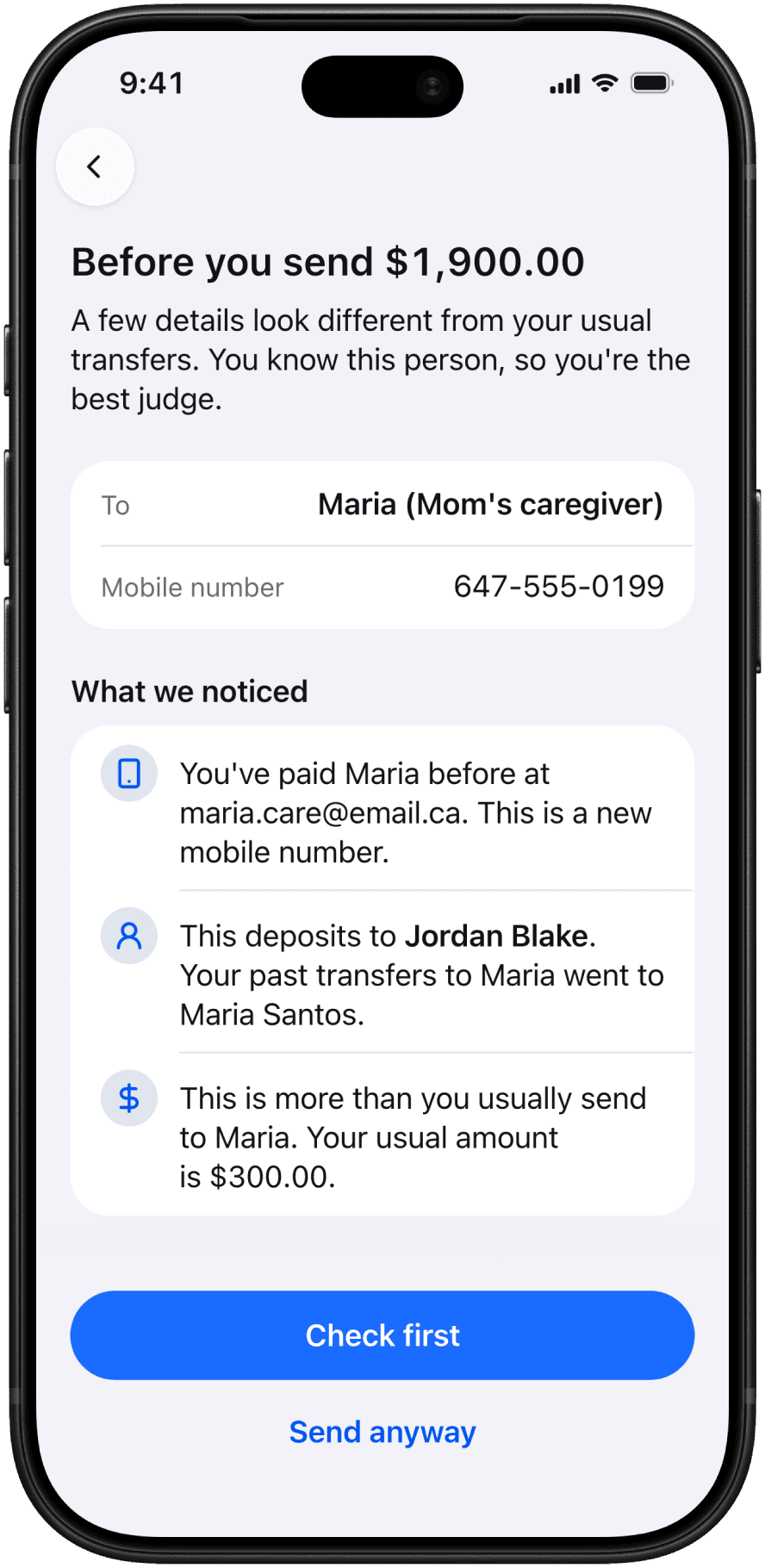
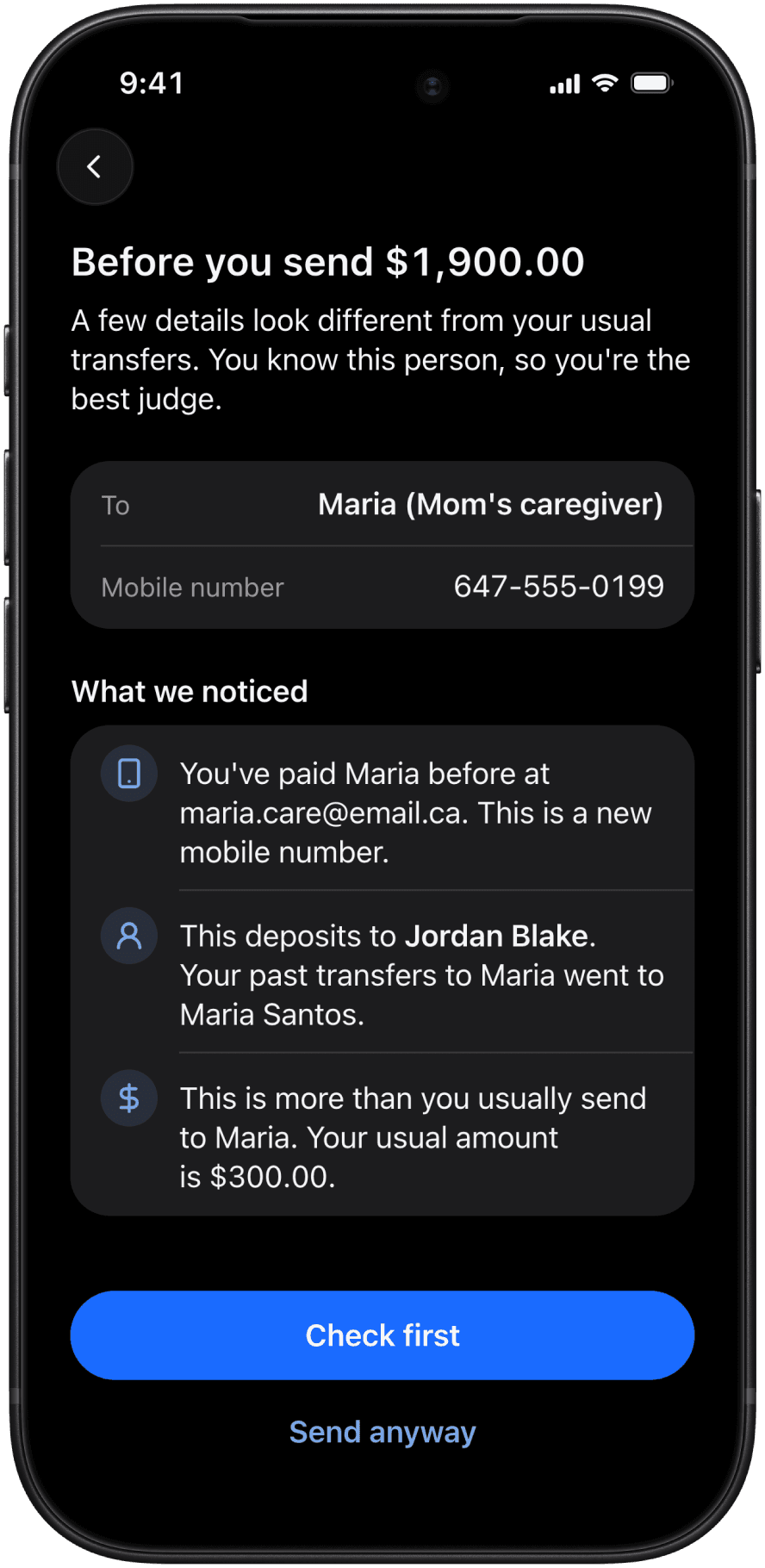
The facts add upThe facts add up: a pause before anything is sent
A warning that appears every time teaches people to skip it. So Signal has three levels. For an ordinary transfer, it says nothing. When something is unusual, like more than you usually send, it adds a one-line note. When the unusual facts add up on a transfer of $200 or more, it pauses before anything is sent. The trade-off: under $200, it never pauses, even when the facts add up. It shows the notes instead, so small everyday transfers are never stopped.
The rules are simple and open, not hidden. Each unusual fact adds to a score. The strongest, like a new number for someone you've paid or a name that doesn't match, count double, so two of them are enough to pause. No single fact pauses a transfer on its own. When you pay your usual landlord, or someone new whose name matches the one you entered, Signal adds nothing at all.
Facts, not warnings
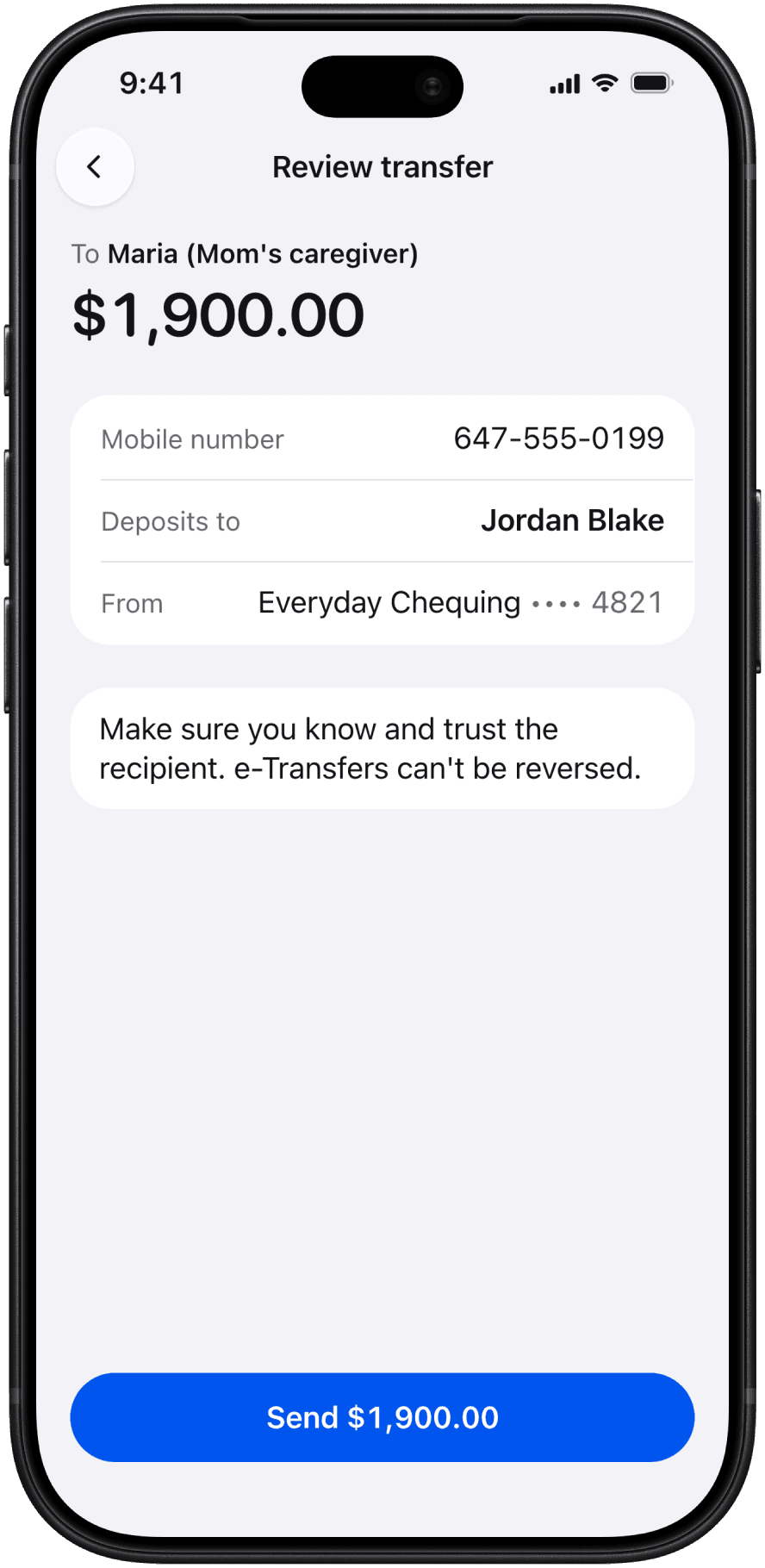
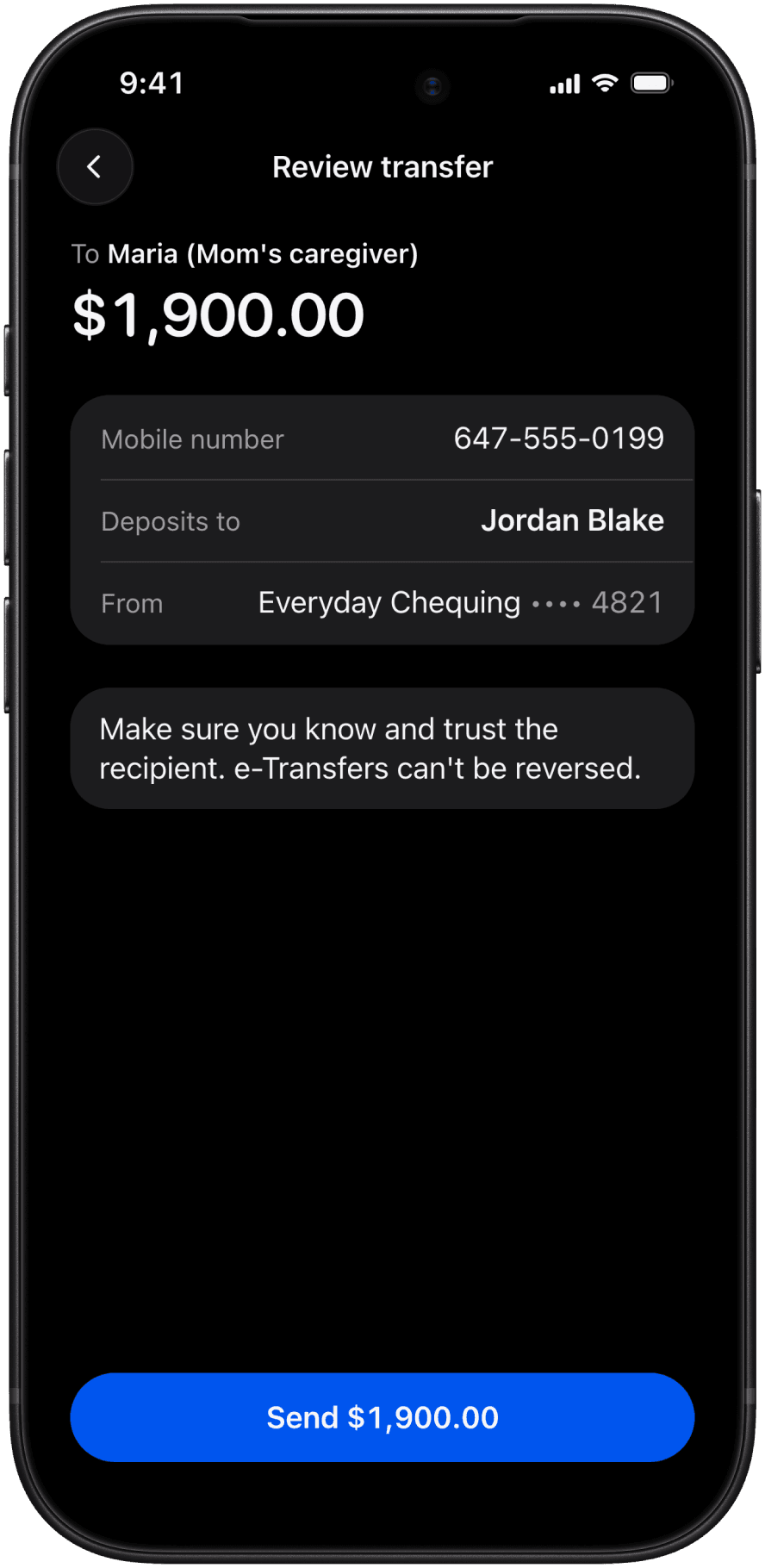
A typical review: the same warning on every transfer
Signal: what's different about this one
A typical bank warning says the same thing on every transfer: make sure you know and trust the recipient. It's always true, so it tells you nothing about this transfer. Signal says what's different about this one, in plain words: "You've paid Maria before at maria.care@email.ca. This is a new mobile number." "This deposits to Jordan Blake. Your past transfers to Maria went to Maria Santos."
Two names side by side are something you can check. A warning is something you learn to dismiss. Signal never calls a transfer safe or verified, and never uses warning colours or alarming words. It shows the facts and leaves the decision to you, because you know things the bank can't.
Pausing costs nothing
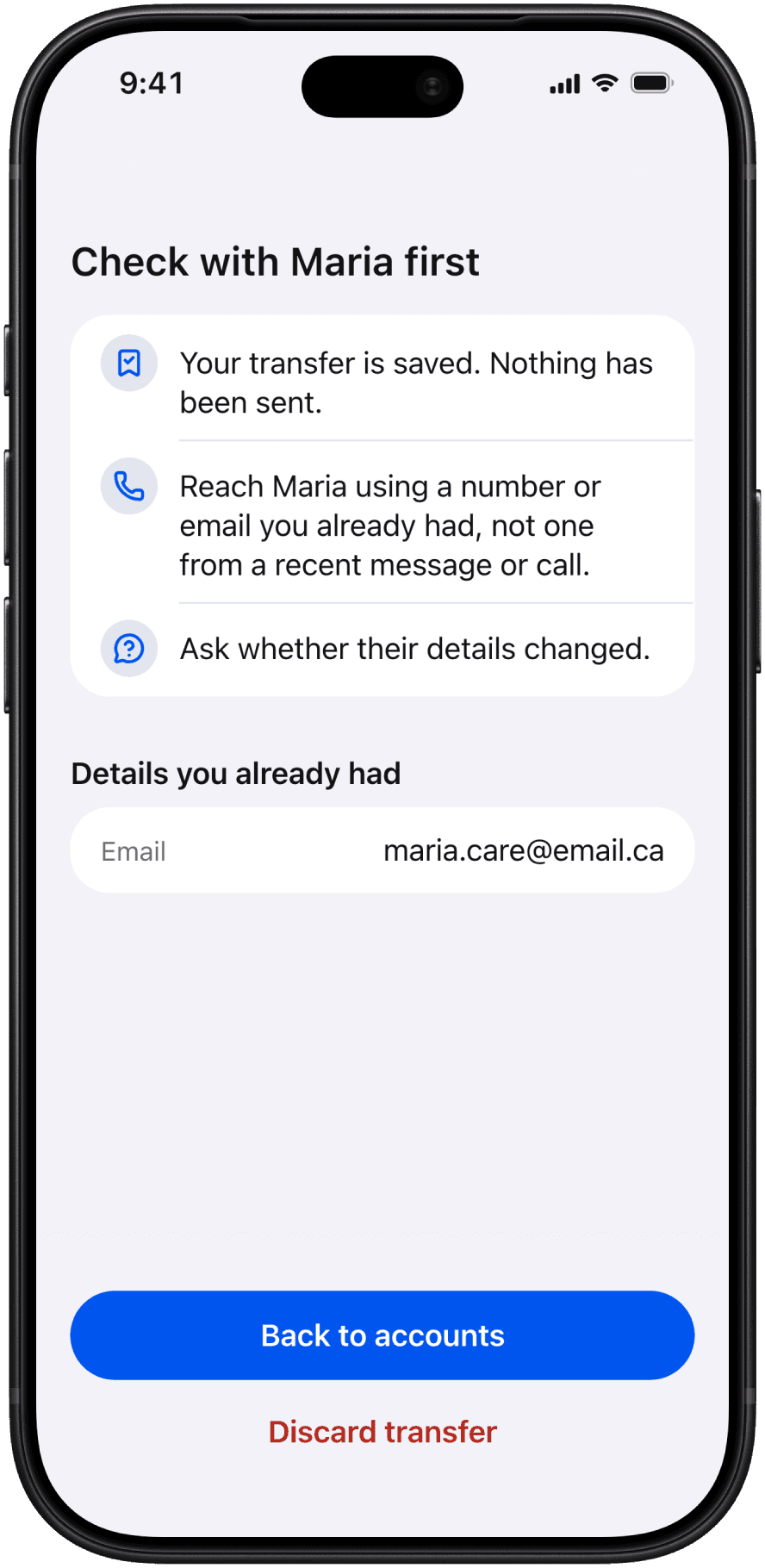
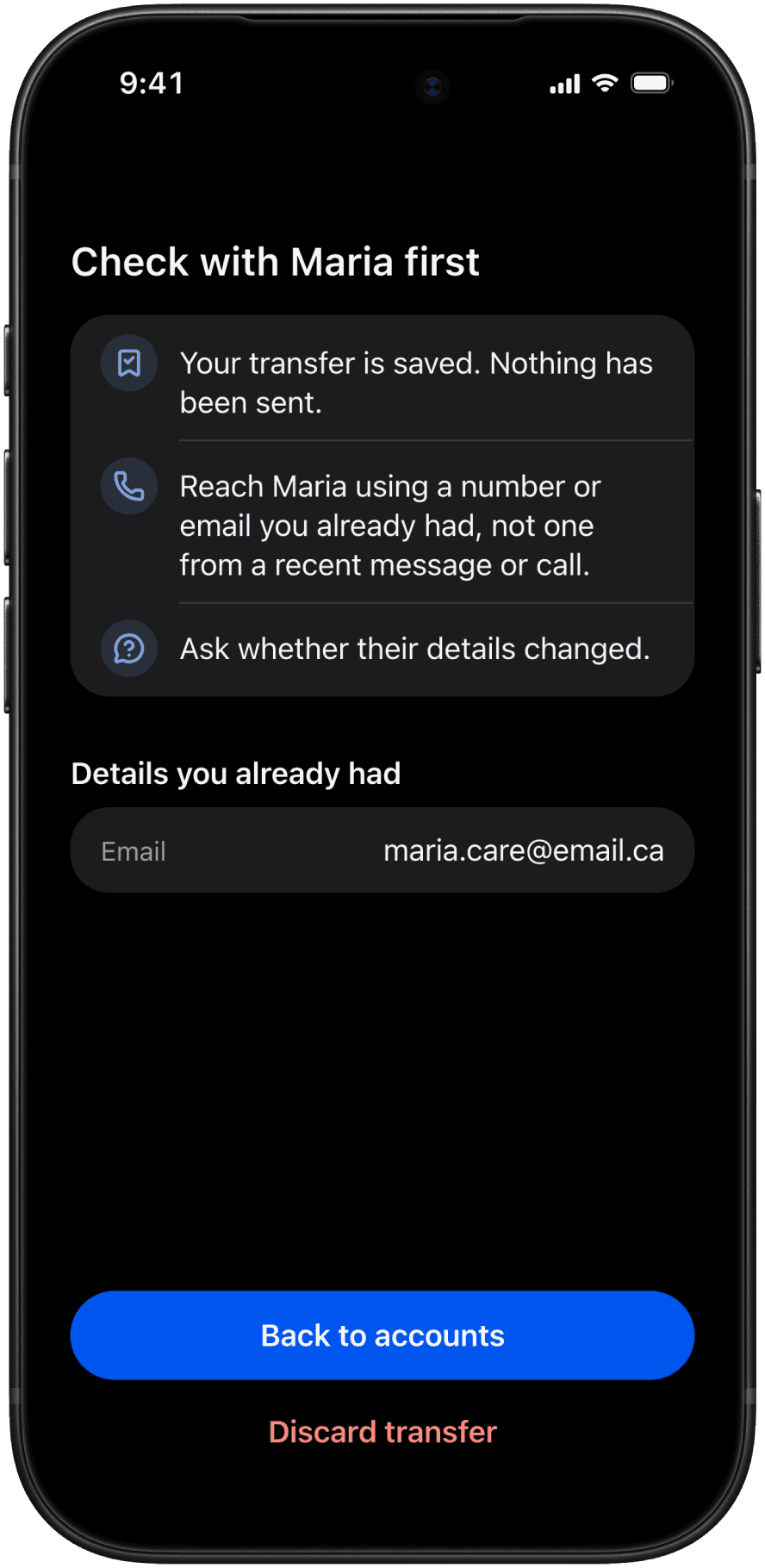
Check first: reach Maria with details you already had
Saved for later: nothing is lost by stopping
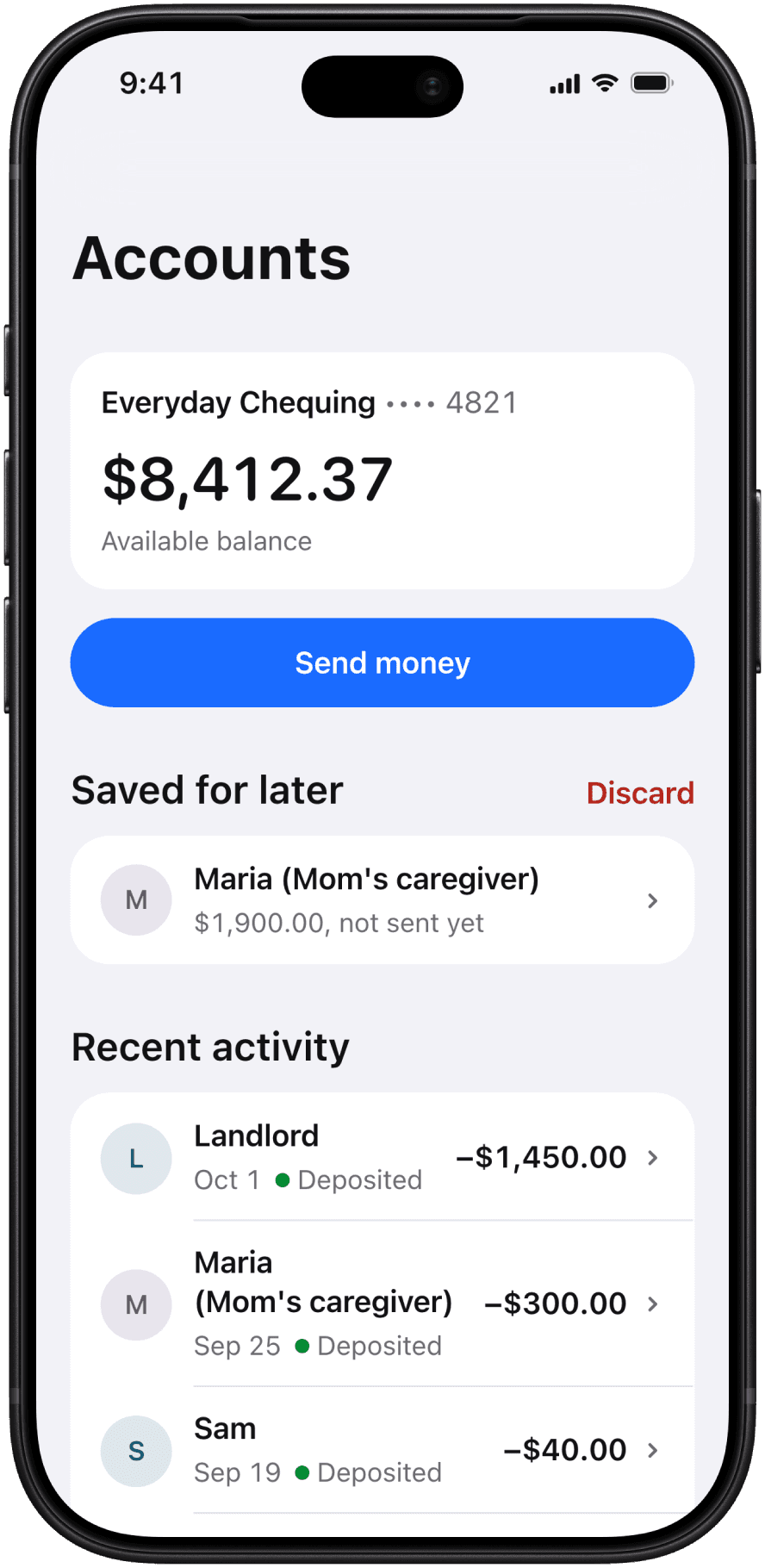
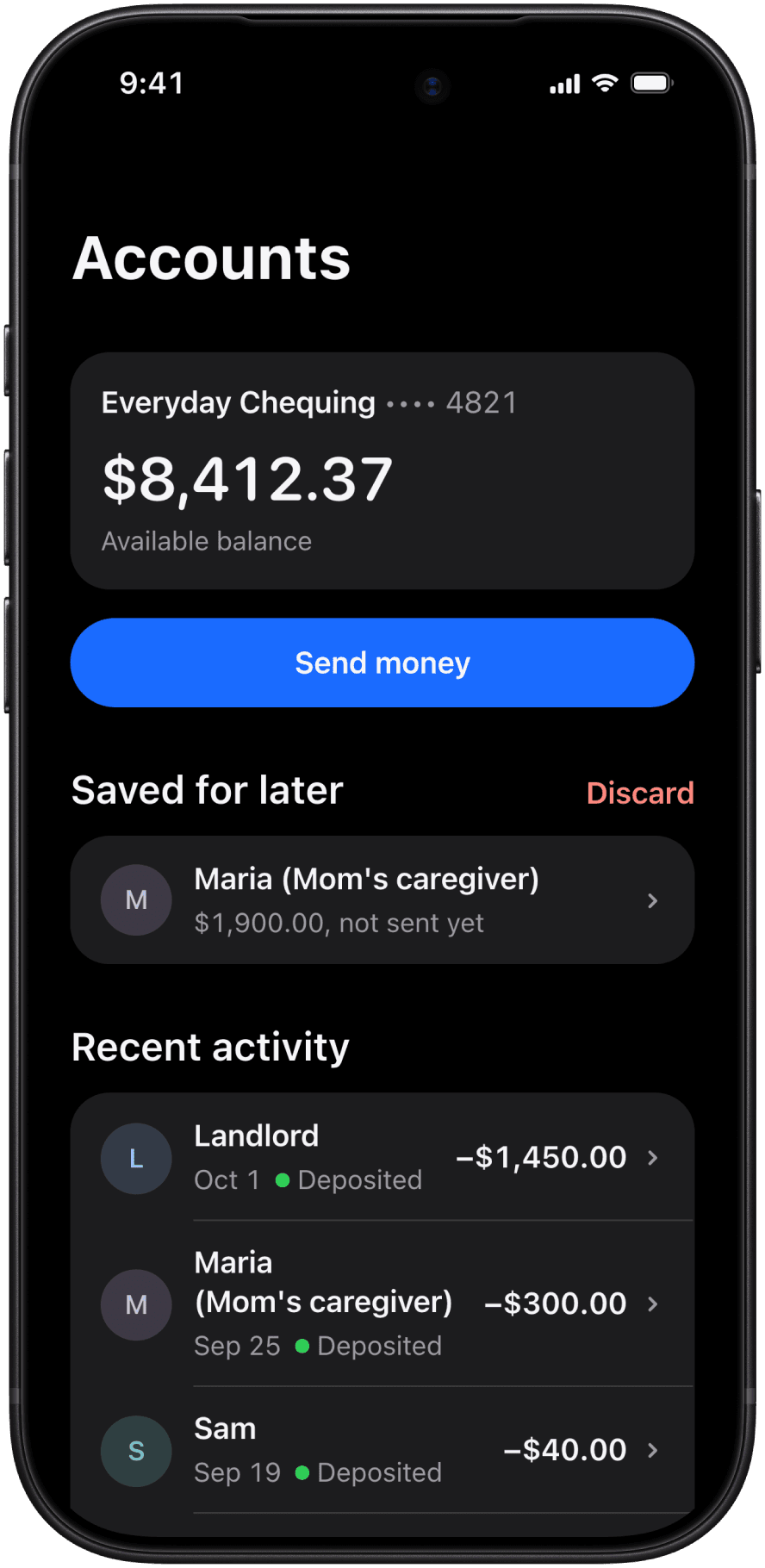
Under pressure, stopping can feel like losing. So the main button on the pause is "Check first", not "Cancel". It saves the transfer and shows how to reach Maria using contact details you already had, not ones from a recent message or call. The transfer waits under "Saved for later" until you send it or discard it.
"Send anyway" stays visible and full size. Signal never blocks a transfer, adds a countdown, or makes sending harder. You decide.
Where it got hard
It noticed, then said nothing. In an early version, Signal spoke only when it paused a transfer. Below that level, it still found the facts but showed none of them: $3,000 to Maria, ten times her usual, went through without a word. Now one unusual fact gets a one-line note.
Every new person got a note. First transfers always showed one, so anyone who often pays new people would learn to skip it. Now you enter a name when you add someone new, and Signal compares it with the legal name from Autodeposit. If they match, it stays quiet. If not, it says "Not the name you entered."
The key screen hid its own fact. On a real phone, with the status bar and home indicator, Maria's pause screen ran 71 px too long, and the third fact sat behind the buttons. Someone could send without seeing it. The fix removed repetition, not facts: the legal name no longer appears twice, and the "From" row came off the pause screen, since there's only one account. Every fact now fits above the buttons.
Built on what banks can do today
What banks already show: the legal name, before you send
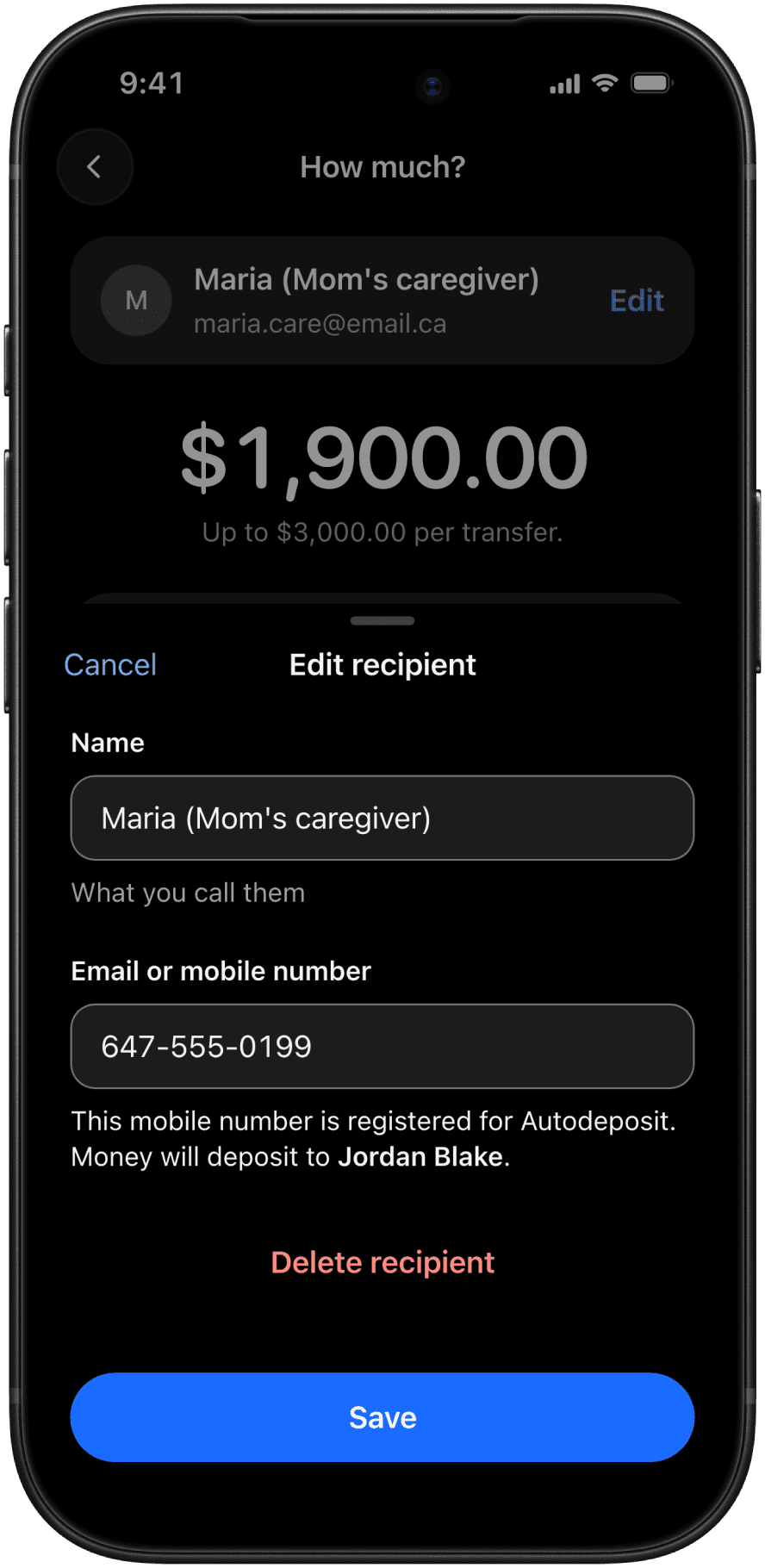
Signal uses only what a Canadian bank can do today. The legal name comes from Interac's Autodeposit lookup, and banks already show it before you send. Everything else comes from your own transfer history and, on iPhone, whether you're on a call. Ideas that needed data a bank doesn't have were dropped, like how old the recipient's account is at another bank. The wording uses Interac's own terms, like "registered for Autodeposit", checked against bank and Interac sources.
One open question: comparing names with past transfers needs the bank to keep the legal name it showed each time. Banks show that name on every Autodeposit transfer, so they could store it. Whether they do today is unconfirmed.
Next: testing
The plan is a moderated test with five to six people. Each person does two rounds, one with Signal and one with a typical bank review, and each round has three ordinary transfers before the one that matters. Half the participants see the typical review first. What counts as noticing is set in advance: saying the name or number looks wrong, tapping "Check first", or asking about the legal name.
Verified so far: every screen meets WCAG 2.2 AA contrast, and every fact on the pause fits on one phone screen, above the buttons.
The sessions haven't run yet. Results will be reported as counts, like how many of six people noticed, never as a claim that Signal reduces fraud. With six people, the counts show direction, not proof.